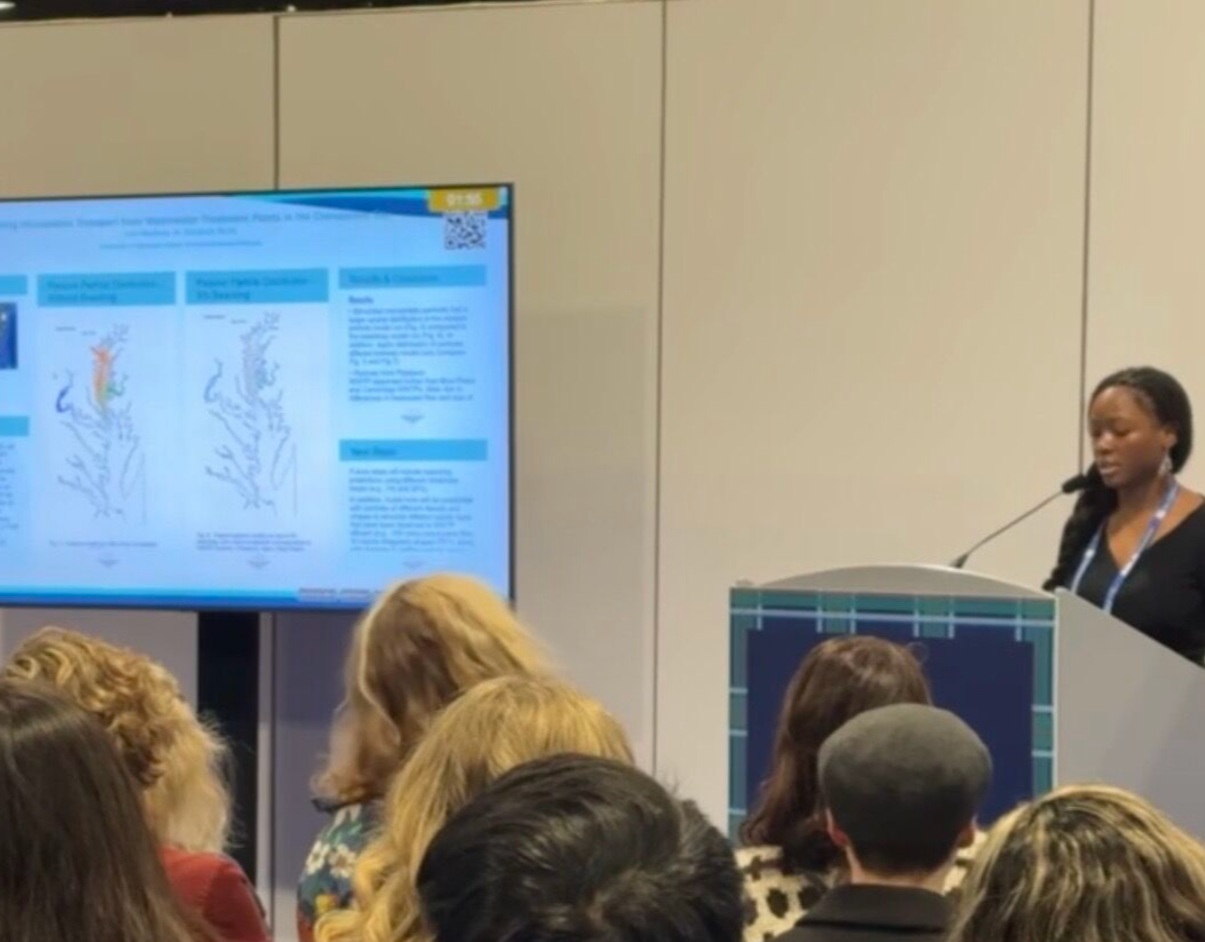
Modeling Microplastics from Wastewater Treatment Plants in the Chesapeake Bay

Microplastic particles of all types are able to bypass micron-sized filtration systems at wastewater treatment plants. Due to their size, these plastics are able to evade catchment and are re-dispersed into aquatic ecosystems in post-treatment effluent water.

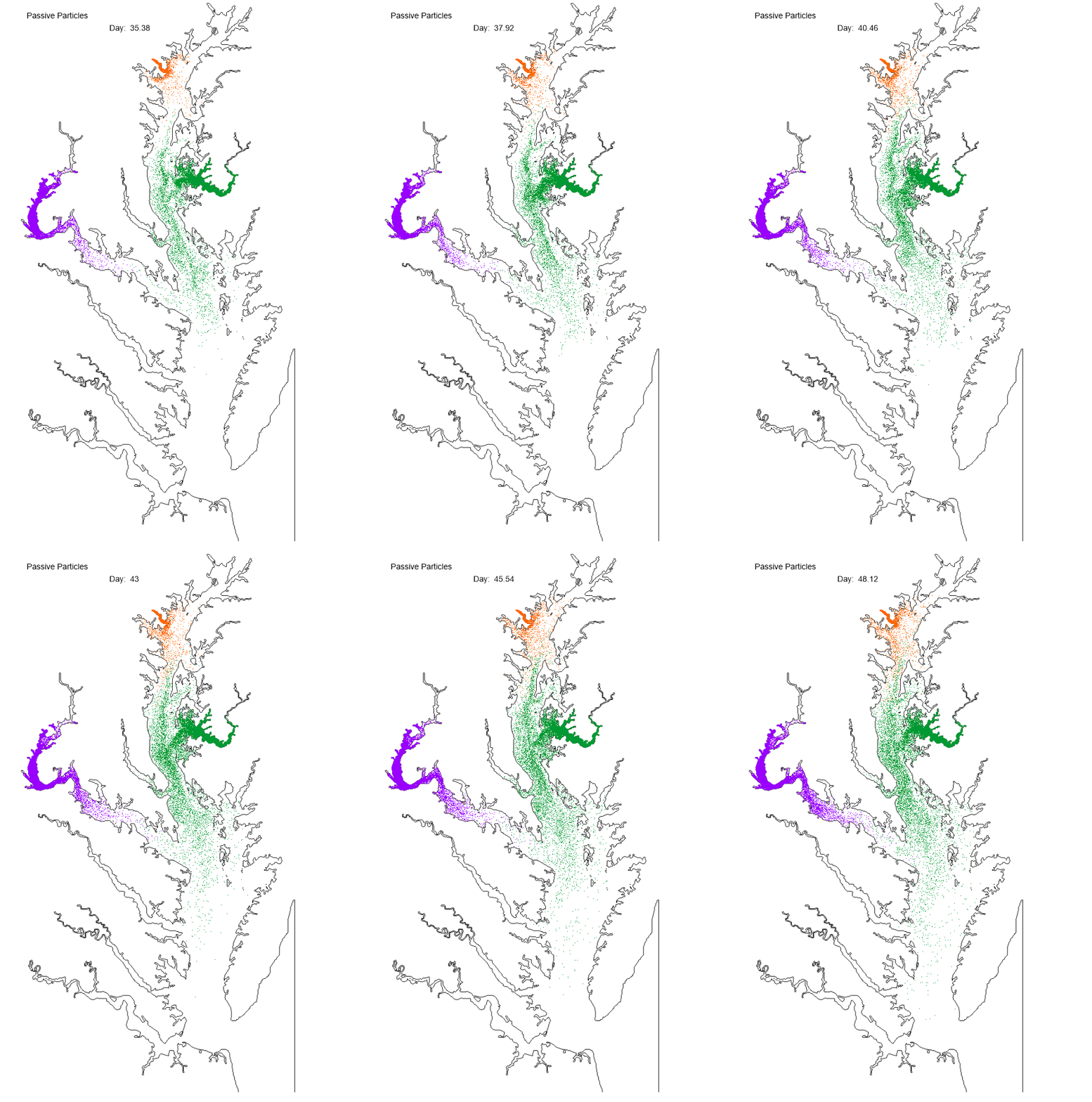
We are using hydrodynamic model ChesROMS, and particle-tracking computer model LTRANS to simulate plastic particles that emerge post-treatment from 3 wastewater treatment plants in the Chesapeake Bay. Their fate and transport provides information on behavioral characteristics like beaching, fate variations due to microplastic chemical composition, density, and shape.

This is amongst the first studies within the region and can provide data for wastewater treatment plant management strategies, amongst other environmental data.

Meet Loni

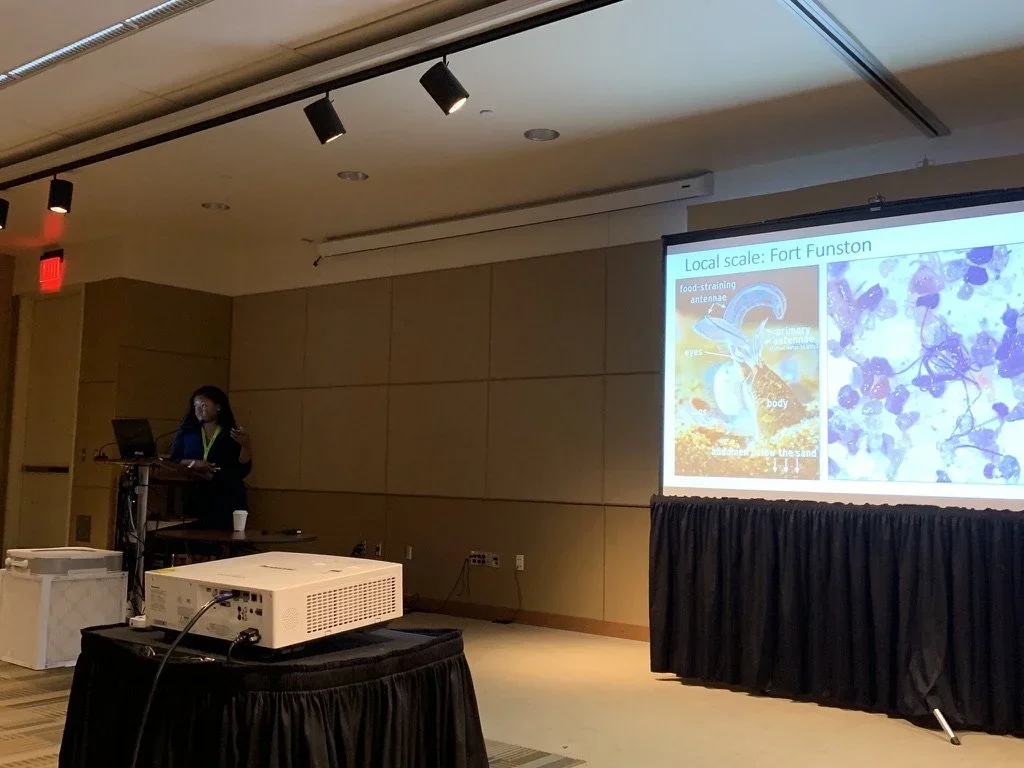
Loni Matthew is a marine biologist, microplastics researcher and science communicator based in Washington, D.C. Her work sits at the intersection of science and storytelling, where she translates data into conversation.

Alongside her computer modeling research, she works with local non-profits that work with state governments to reduce single-use plastic distribution at public institutions.

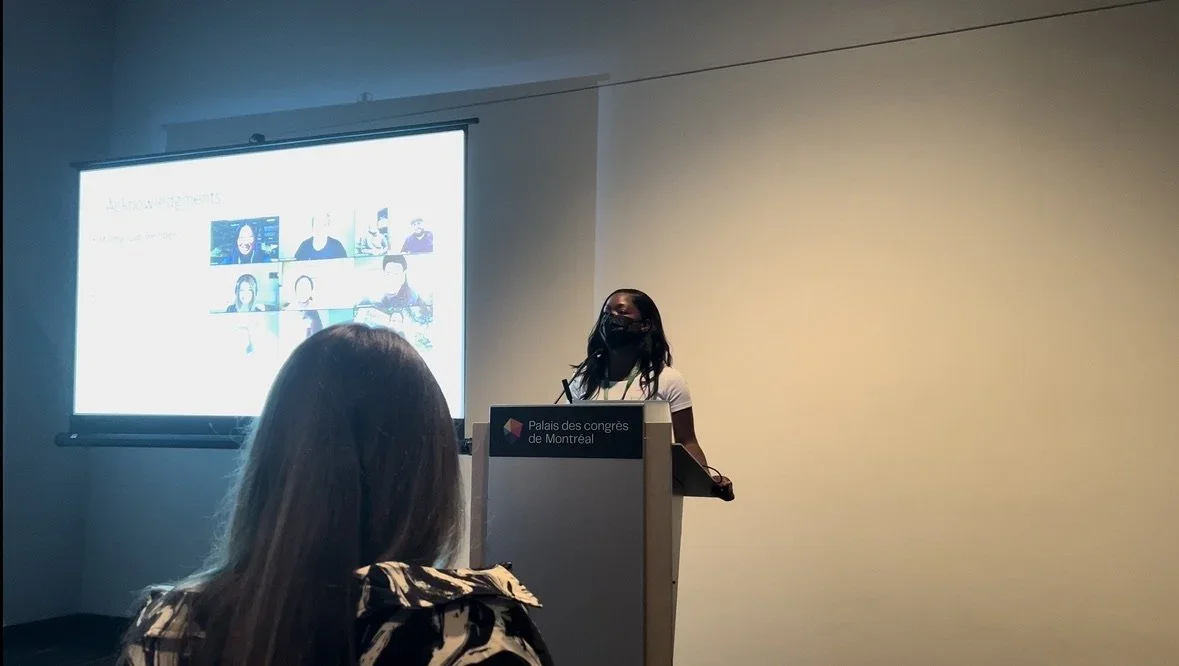
Through public talks, community partnerships, and digital storytelling, Loni amplifies conversations about aquatic health, sustainability and environmental responsibility.